

DILL OIL
Bright, aromatic oil for finishing, plating, and infusion

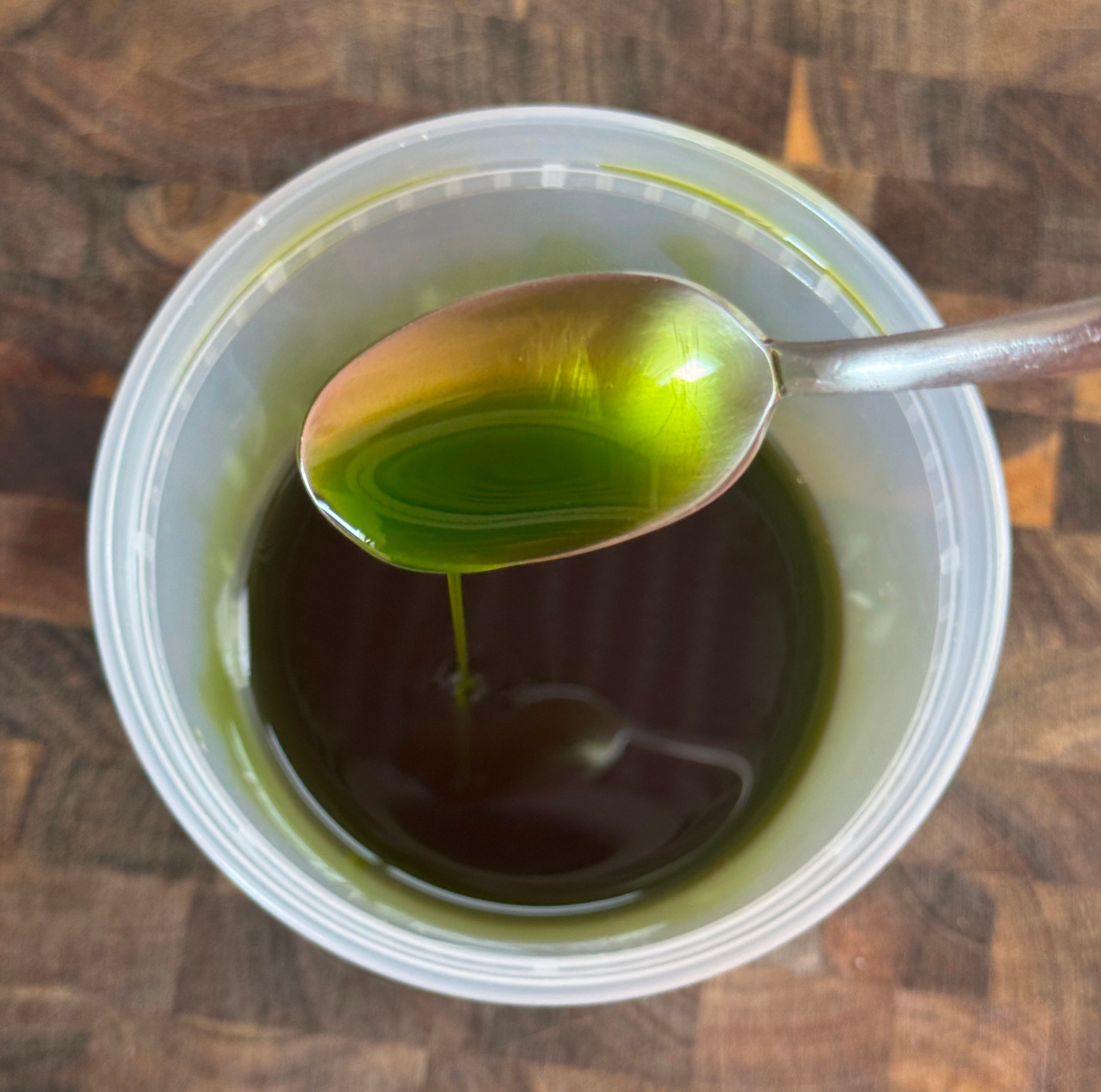
Dill has a bright, fresh, and slightly anise-like flavor that brings a clean herbal note to dishes. This oil captures its essence in a concentrated, vibrant green form. Ideal for finishing fish, shellfish, yogurt sauces, cold soups, pickled elements, or plating modern vegetable dishes — it adds both flavor and visual finesse.
Ingredients
120 g fresh dill (including stems)
300 ml grapeseed oil
2 g baking soda (approx.½ tsp)
Method
Prepare the blanching water
Bring a large pot of water to a boil. Add baking soda to raise the pH and help preserve the bright green color by protecting the chlorophyll.Blanch the dill
Blanch the dill for 10–15 seconds, then immediately transfer it to an ice bath to stop the cooking.Dry thoroughly
Drain and press the dill dry between paper towels or a clean cloth. Excess water can affect the emulsion and reduce its shelf life.Blend with oil
Add the dill and grapeseed oil to a high-speed blender.
Blend at high speed until the temperature reaches 80°C (176°F) — this helps to break down the plant cells and extract maximum flavor and color.Strain
Pass the oil through a fine mesh sieve or chinois. Avoid pressing too hard to prevent cloudiness.Separate impurities
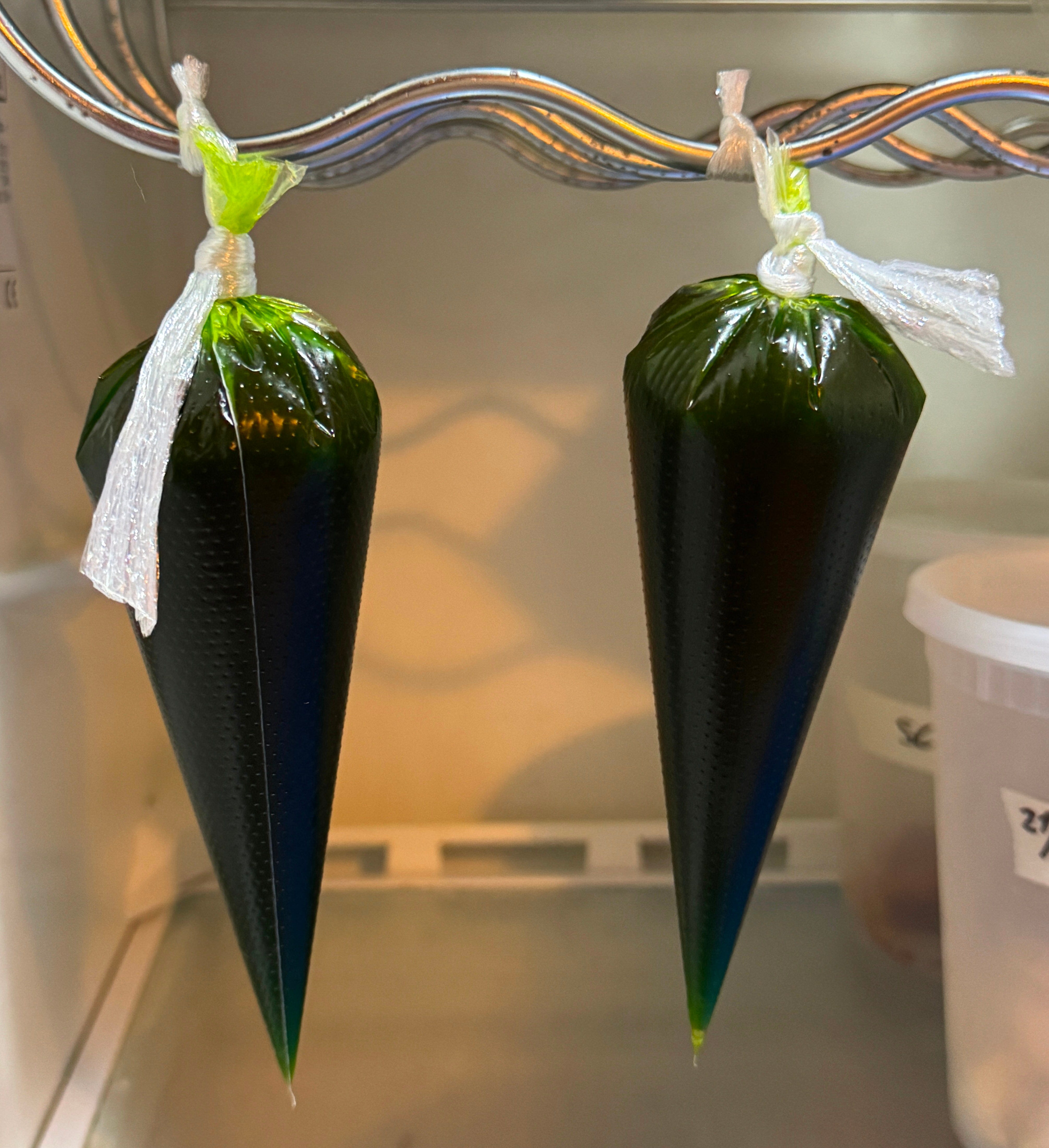
Transfer the strained oil into a piping bag, hang or place it upright in the fridge overnight to allow impurities to settle at the bottom.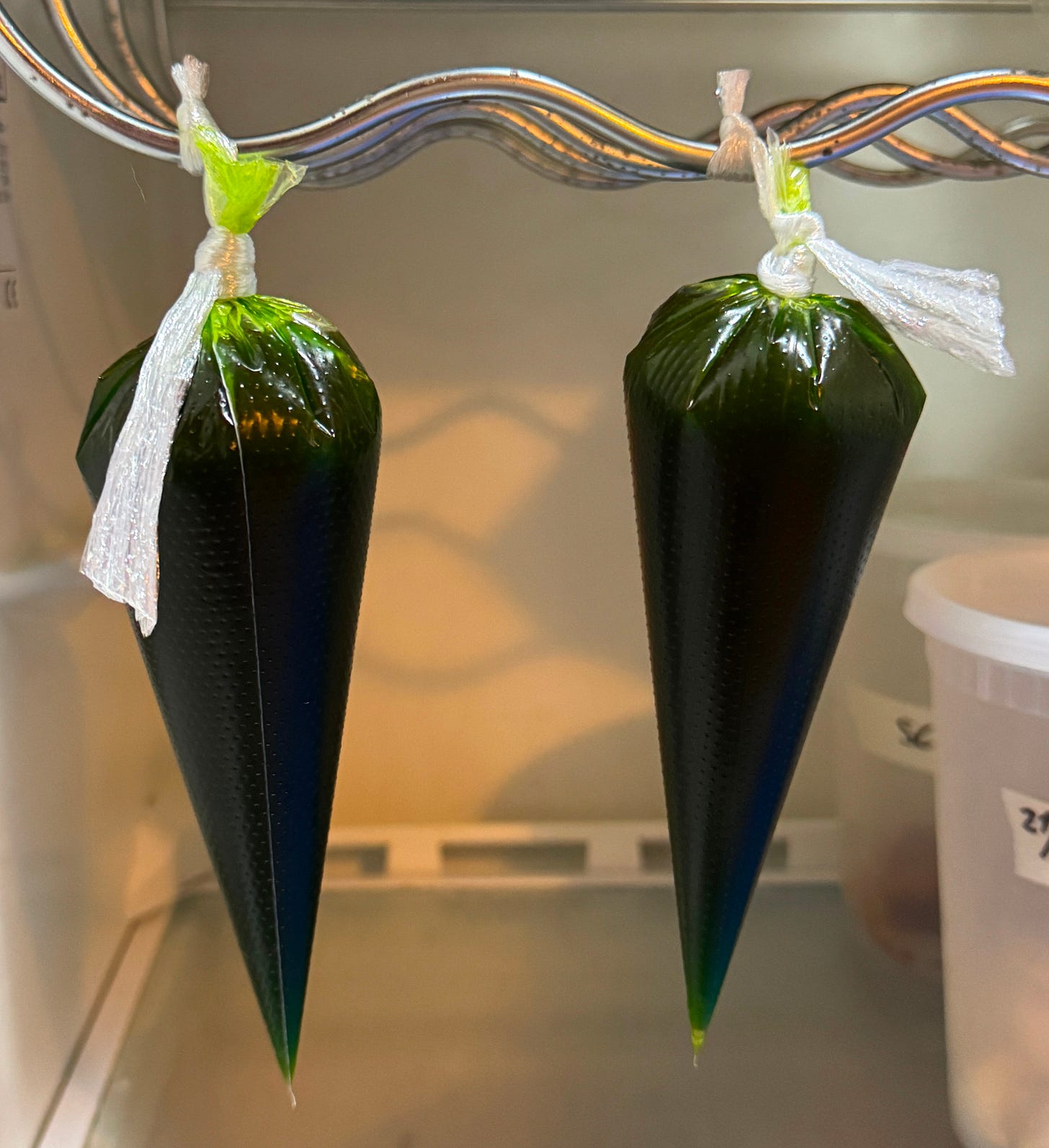
Finish
The next day, cut the tip of the piping bag and slowly release the clear, bright green dill oil, leaving the cloudy residue behind.
Tips
Baking Soda in Blanching Water
Add 1–2 g of baking soda per liter of water to increase alkalinity. This preserves chlorophyll, which is otherwise degraded by heat and acidic conditions.
Overdoing it can damage flavor or make the herbs mushy
Blanching
Time: 10–15 seconds is enough. The goal is to soften cell walls just enough to aid in blending without cooking out flavor.
Immediately shock in ice water to lock in the bright color and stop carryover cooking.
Drying Herbs
Moisture is the enemy of stable emulsions. Use a salad spinner, or squeeze with your hands, then finish with paper towels. Herbs must be as dry as possible before blending.
Blending to 80°C
Use a high-speed blender (e.g., Vitamix) and monitor the temperature — friction will generate heat.
Blending to 80°C (176°F) helps break cell walls, extract oils, and deepen green color, without denaturing flavor compounds.
Blend for 2–3 minutes or until the desired temperature is reached.
Straining
Pass through a superfine chinois or double-layered cheesecloth.
Avoid pressing or squeezing — this will release particles and cloudy moisture that dull the oil.
Separation
Transfer to a piping bag or tall glass and refrigerate overnight. This allows impurities to settle at the bottom.
Carefully cut the piping bag tip and let only the clear oil flow, stopping just before the cloudy residue.